From AI Images to Visual Systems
AI disclosure — This article contains visual material generated or manipulated using artificial intelligence.
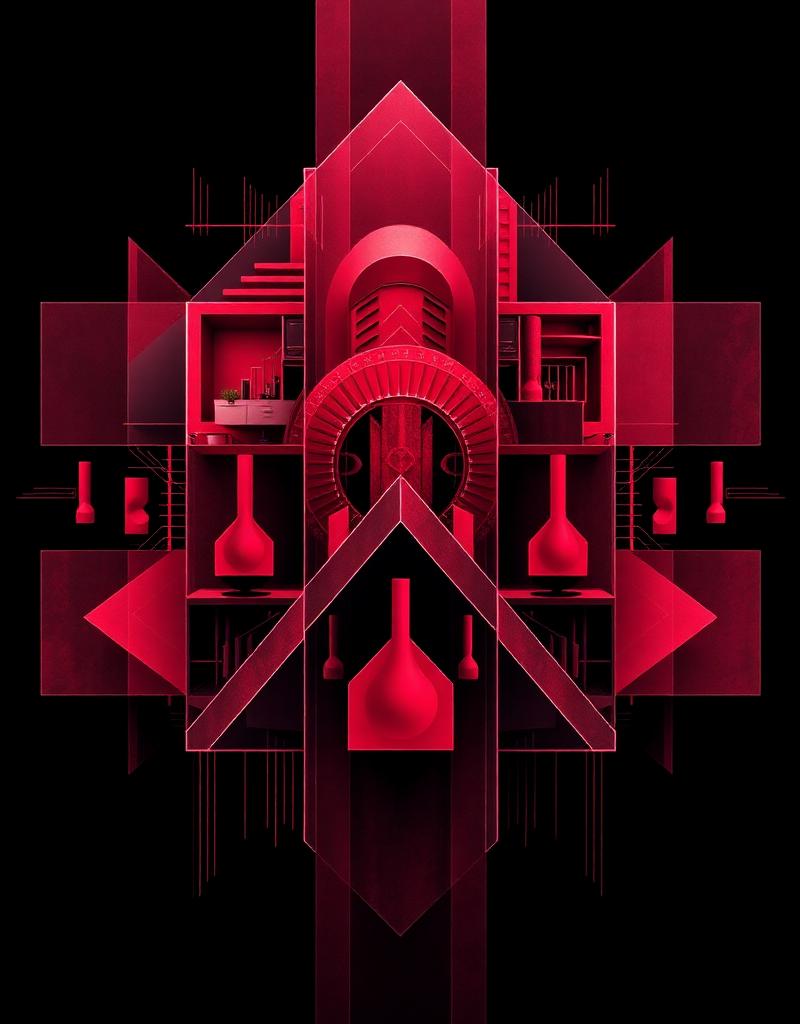
From AI Images to Visual Systems: The Next Stage of Brand Content
Why the future of AI production will not be built on single outputs
For the last two years, much of the conversation around generative AI has been dominated by the single image.
One prompt. One output. One moment of surprise.
A product floating in an impossible landscape. A fashion silhouette in a surreal environment. A beverage campaign imagined in a world that never existed. For a while, the single AI image was enough to create attention, because the medium itself was new.
That phase is ending.
The next stage of AI production is not about generating isolated visuals. It is about building visual systems.
A visual system is not one image. It is a coherent set of assets, rules, moods, formats, variations and production decisions that can support a brand across products, campaigns, channels and audiences. It is the difference between an image that looks interesting once and a world that can be repeated, adapted and recognized.
For brands, this shift matters enormously.
The market does not need more random AI visuals. It needs controlled visual languages that can scale without losing taste.
The problem with the single AI image
A single AI image can be impressive, but it is rarely enough.
It may look beautiful in isolation, but brands do not operate in isolation. They need consistency across touchpoints: social, e-commerce, advertising, launch assets, product pages, retail media, presentations, CRM, paid media, pitch materials and internal decks.
The real question is not:
Can we generate something beautiful?
The real question is:
Can we generate a visual world that remains coherent across multiple outputs?
This is where many AI productions fail.
They produce an image, not a system. They create an aesthetic, but not a language. They deliver a result, but not a repeatable direction.
The risk is that the brand becomes visually fragmented. One image looks cinematic, another looks synthetic, another looks like a different campaign entirely. The more the brand produces, the less recognizable it becomes.
AI makes production faster, but speed without structure increases inconsistency.
This is why visual systems are becoming the real frontier.
From content creation to content supply chains
The shift is already visible in the enterprise market.
Adobe describes GenStudio as an end-to-end content supply chain solution designed to help teams create, manage and scale on-brand content faster, with generative AI integrated across the workflow. Adobe’s language is important: it is no longer just about generating assets, but about governing the entire content process, from planning and creation to activation, delivery, reporting and insights.
This is a signal of where the market is moving.
Brands are not only asking for more content. They are asking for content that is faster, more personalized, more measurable and still brand-safe.
The content problem is no longer simply creative. It is operational.
Every campaign needs more formats. Every market needs more adaptations. Every platform demands different dimensions, durations, styles and messages. Every product launch requires a larger number of assets than before.
Generative AI can help answer that demand, but only if it is directed through a system.
Otherwise, it produces volume without coherence.
A visual system is a brand asset
A strong visual system gives a brand more than content. It gives the brand a repeatable visual logic.
It defines how a product is framed. How light behaves. How materials are treated. How environments are imagined. How motion feels. How colors evolve. How surreal or realistic the world can become. How much abstraction is allowed. How close the output should remain to physical reality.
In traditional brand identity, these decisions lived in guidelines: logo usage, colors, typography, spacing, photographic style.
In AI production, they become even more important.
Because AI can generate almost anything, the boundaries need to be sharper.
A brand must know what it can become, but also what it must never become.
This is where the work becomes strategic.
The task is not to ask AI for “beautiful images.” The task is to define a controlled territory where the brand can expand without losing itself.
A visual system answers questions like:
- What does this brand world look like?
- What kind of reality does the brand inhabit?
- How synthetic can it feel?
- What type of light, texture, color and atmosphere belong to it?
- How should products appear inside this world?
- What visual codes must remain consistent across outputs?
- How can the system adapt to different campaigns without becoming generic?
When these answers are clear, AI stops being a random generator and becomes a production layer.
The rise of on-brand AI content
The demand for on-brand generative content is becoming more visible.
Adobe has introduced tools around brand intelligence and brand-aware content generation, describing systems that connect enterprise context, brand intelligence and AI agents across content workflows. Adobe Firefly custom models also point in the same direction: brands want generative systems that can preserve specific visual characteristics, such as color palette, lighting and style, rather than producing generic outputs.
This matters because brand value is built on recognition.
If AI creates content that does not feel like the brand, it does not solve the problem. It only creates more material to review, reject or repair.
The future of AI production will therefore depend less on raw generation and more on controlled adaptation.
The strongest brands will not be the ones producing the most AI content. They will be the ones able to generate the most coherent visual ecosystem.
Why “more content” is not enough
Marketing teams are under pressure to produce more assets than ever. Reuters recently reported that global firms are using AI in marketing hubs to bring more advertising work in-house, accelerate product visuals and reduce production time, with some examples showing dramatic reductions in content creation timelines.
The attraction is obvious: speed, scale, cost efficiency.
But the real danger is also obvious: if everyone can produce more, volume stops being a differentiator.
The advantage shifts from production capacity to production quality.
In other words, AI makes quantity easier. It makes direction more valuable.
A brand that generates hundreds of disconnected assets may become less memorable, not more. The audience does not perceive effort. It perceives coherence, taste and clarity.
The question is not how much content a brand can create.
The question is whether every output reinforces the same world.
The new role of creative direction
In AI production, creative direction becomes more important, not less.
The director is no longer only selecting a photographer, a set designer or a post-production team. The director is shaping a generative space.
That means defining the visual territory before generation begins. It means building prompt architectures, references, constraints, negative spaces, material directions, lighting systems and output criteria.
It also means knowing when not to use AI.
Some assets may need photography. Some may need 3D. Some may need compositing. Some may need generative exploration. Some may need a hybrid process.
A mature AI production workflow does not force everything through one tool. It designs the right process for the desired output.
This is why “visual system” is a more useful concept than “AI image.”
The system includes the tools, but it is not defined by them.
Product visualization as a system
Product visualization is one of the clearest examples.
A single AI-generated product image may be useful for exploration, but a brand usually needs much more:
- product-in-context images
- campaign worlds
- seasonal variations
- colorway adaptations
- launch visuals
- social cuts
- paid media assets
- e-commerce enhancement
- presentation visuals
- localized adaptations
- motion variations
If these are generated without a system, the product changes from image to image. Materials become unstable. Proportions drift. Lighting changes meaning. The brand loses control.
But when product visualization is treated as a system, AI becomes powerful.
The product can live in multiple worlds while remaining recognizable. The campaign can adapt without becoming incoherent. The brand can produce faster without looking cheaper.
This is the point: the goal is not to replace the product. The goal is to expand the way the product can be seen.
Visual worlds, not visual noise
The expression “visual world” is important.
A visual world is larger than an asset. It is the environment of meaning around a brand, product or campaign.
It includes color, texture, rhythm, composition, atmosphere, symbolic references, motion behavior, spatial logic and emotional temperature.
AI is especially powerful here because it can help imagine worlds that do not yet exist. But without direction, those worlds become decorative.
They may look visually rich, but strategically empty.
The value is not in making something strange. The value is in making something strange that still belongs to the brand.
This is the difference between visual noise and visual world-building.
Toward campaign-ready AI production
The next stage of AI production will be judged by a very simple question:
Can this output enter a real campaign?
Not just a moodboard. Not just a social experiment. Not just a beautiful image on LinkedIn.
A campaign.
That means it must be:
- aligned with the brand
- consistent across formats
- approved by decision makers
- adaptable to channels
- technically usable
- visually distinctive
- commercially credible
This is where many AI outputs still fail. They impress at first glance, but collapse when they need to become a campaign system.
Rubinia’s perspective is that the future belongs to AI production workflows that can move from concept to asset system, from image to world, from generation to direction.
The Rubinia perspective
At Rubinia, we do not see AI production as the creation of isolated images.
We see it as the design of visual systems.
A brand does not need a random output. It needs a visual language that can be directed, expanded and controlled.
This requires three layers working together:
Creative strategy
The definition of the brand objective, visual territory and conceptual direction.
Generative production
The use of AI models, workflows and iteration systems to explore and build the visual matter.
Aesthetic direction and finishing
The selection, refinement and transformation of outputs into premium assets ready for use.
The tool is not the center. The system is.
AI accelerates production, but direction gives it meaning.
The next competitive advantage
As generative tools become more accessible, access will no longer define the difference.
The real competitive advantage will be the ability to create consistent, premium and scalable visual systems.
Brands that understand this will move beyond isolated AI experiments. They will use generative production to build richer campaign worlds, stronger product narratives and more adaptive visual identities.
Brands that do not will produce more content, but not necessarily more value.
The future of AI production is not the image.
It is the system behind the image.
Sources and further reading
- Adobe GenStudio overview: https://business.adobe.com/products/genstudio.html
- Adobe GenStudio content supply chain announcement: https://news.adobe.com/news/2025/03/adobe-expands-genstudio-content-supply-chain
- Adobe Brand Intelligence announcement: https://news.adobe.com/news/2026/04/adobe-introduces-brand-intelligence
- Adobe Firefly custom models coverage: https://www.creativebloq.com/design/design-software/can-adobes-new-custom-firefly-models-finally-tame-ai
- Reuters on global firms using AI for advertising and marketing production: https://www.reuters.com/business/media-telecom/global-firms-use-ai-indian-hubs-bring-more-ad-work-in-house-2026-05-27/